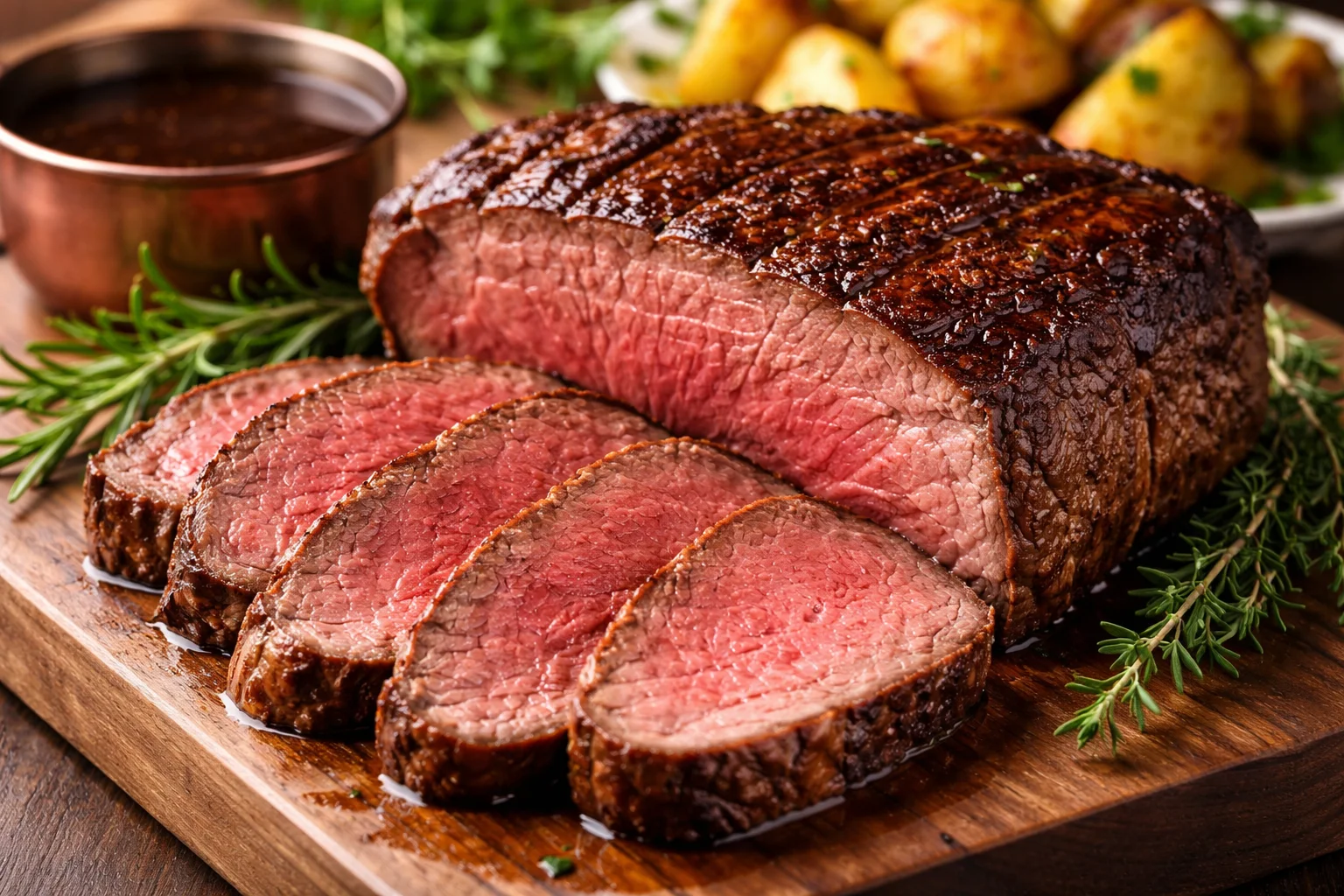
Chateaubriand is one of the most respected and luxurious beef dishes in the world. It is known for its tenderness, rich flavor, and elegant presentation. Many people hear the name and feel curious, but not everyone clearly understands what chateaubriand truly is, how it is prepared, and why it holds such a special place in fine dining.
This article explores chateaubriand in a clear, practical, and focused way. Every part stays centered on real details, real cooking methods, and real usage. Nothing extra, nothing weak, and nothing off-topic.
What Chateaubriand Really Is
Chateaubriand is a thick cut taken from the center of the beef tenderloin. This part of the cow is extremely tender because it does very little work. Unlike thinner steaks, chateaubriand is usually cut as a large piece meant to be shared by two people.
Key points that define chateaubriand:
- Cut from the center of the tenderloin
- Very thick and evenly shaped
- Designed for even cooking
- Known for soft texture rather than heavy fat
Because it comes from the most tender section of the animal, chateaubriand does not need aggressive seasoning or complicated handling. Its quality speaks for itself.
Why Chateaubriand Is Considered Special
Chateaubriand stands apart from other beef cuts for several important reasons.
Exceptional Tenderness
The tenderloin is the softest muscle in the cow. When cooked correctly, chateaubriand can be cut with almost no resistance. This texture is the main reason it is often served on special occasions.
Clean, Pure Beef Flavor
Unlike fatty cuts that rely on marbling, chateaubriand offers a clean and refined beef taste. The flavor is mild but deep, making it ideal for people who appreciate balance rather than heaviness.
Elegant Presentation
Chateaubriand is usually cooked whole and sliced at the table. This creates a dramatic and refined dining experience that feels both traditional and timeless.
Chateaubriand vs Other Tenderloin Cuts
Many people confuse chateaubriand with other tenderloin steaks. Understanding the difference helps avoid mistakes when buying or ordering.
Chateaubriand vs Filet Mignon
- Chateaubriand: Thick center cut, serves two people
- Filet mignon: Smaller individual portions, cut from the ends
Both are tender, but chateaubriand offers a more uniform shape and shared dining style.
Chateaubriand vs Beef Tenderloin Roast
- Chateaubriand is a specific center section
- A tenderloin roast includes multiple sections, not all equally tender
Chateaubriand focuses only on the best part.
See also Gyros Grillgerät: What It Is, How It Works, and How to Choose the Right One
How Chateaubriand Is Traditionally Prepared
Proper preparation is essential. Because this cut is thick and lean, careless cooking can ruin its texture.
Seasoning
Chateaubriand needs very little:
- Salt
- Freshly ground black pepper
- Optional butter or herbs
Heavy marinades are avoided because they hide the natural taste of the beef.
Cooking Method
The most reliable approach uses two stages:
- High heat sear to develop a crust
- Gentle heat finish to cook the center evenly
This method protects the softness inside while building flavor on the outside.
Ideal Doneness
Chateaubriand is best served:
- Medium-rare
- Medium
Overcooking removes moisture and reduces tenderness.
Step-by-Step Cooking Overview
A clear process helps ensure success.
- Bring the beef to room temperature
- Season evenly on all sides
- Sear in a hot pan or oven-safe skillet
- Transfer to gentle heat to finish cooking
- Rest the meat before slicing
- Slice thick and serve immediately
Resting is critical. It allows juices to stay inside the meat instead of leaking out.
Sauces Commonly Served With Chateaubriand
Although the beef itself is the star, sauces are often paired lightly.
Popular options include:
- Butter-based herb sauces
- Red wine reductions
- Mild pepper sauces
The sauce should support the beef, not dominate it.
Best Side Dishes for Chateaubriand
Side dishes should stay simple and complementary.
Good pairings include:
- Roasted potatoes
- Mashed potatoes
- Steamed vegetables
- Light salads
Heavy or overly spiced sides can distract from the main dish.
Buying Quality Chateaubriand
Choosing the right piece matters as much as cooking it well.
What to Look For
- Even thickness
- Bright red color
- Fine texture
- Fresh smell
Avoid cuts with uneven shape or excessive trimming.
Where to Buy
- Trusted butchers
- High-quality meat markets
- Reputable specialty stores
Ask specifically for the center cut of the tenderloin.
Storage and Handling
Because chateaubriand is lean and premium, proper handling keeps it safe and flavorful.
- Store cold until cooking
- Keep wrapped tightly
- Use within a short time window
- Avoid freezing if possible
If freezing is necessary, wrap carefully to prevent moisture loss.
Common Mistakes to Avoid
Many problems come from small errors.
Mistakes that reduce quality:
- Cooking straight from the fridge
- Over-seasoning
- Cooking too fast all the way through
- Skipping the resting step
Each of these can damage texture and flavor.
Chateaubriand in Restaurants vs Home Cooking
Restaurants often use professional ovens and precise temperature control, but home cooking can still deliver excellent results.
At home:
- Focus on temperature, not time
- Use a thermometer if available
- Trust visual and tactile cues
The simplicity of the cut makes it achievable outside professional kitchens.
Nutritional Profile
Chateaubriand is lean compared to many beef cuts.
General characteristics:
- High protein content
- Lower fat than ribeye or strip steak
- Rich in iron and essential nutrients
Its nutritional balance makes it suitable for people who want richness without heaviness.
Cultural Importance of Chateaubriand
Chateaubriand is often associated with classic European dining traditions. It represents a style of cooking where quality ingredients matter more than decoration or complexity.
It is often served during:
- Formal dinners
- Celebrations
- Romantic meals
- Special gatherings
The dish carries a sense of ceremony and care.
FAQs About Chateaubriand
Is chateaubriand always for two people?
Traditionally yes, because of its size. Smaller portions can be cut, but the classic style is shared.
Can chateaubriand be grilled?
Yes, but careful heat control is required to avoid burning the outside before the center cooks.
Does chateaubriand need a sauce?
No. Many people enjoy it plain with just butter or seasoning.
Is chateaubriand expensive?
It is usually priced higher because it comes from a limited and highly valued part of the animal.
Can leftovers be reheated?
Gently reheating is possible, but fresh serving gives the best texture.
Conclusion
Chateaubriand is not about complexity or excess. It is about precision, balance, and respect for quality beef. When handled correctly, it delivers a dining experience that feels refined, satisfying, and memorable.
Its tenderness, clean flavor, and elegant presence make it a standout choice for anyone who values real craftsmanship in cooking. Whether served at a fine table or prepared carefully at home, chateaubriand remains a timeless symbol of excellence done right.